
by Shelli Quattlebaum
As a Northern Colorado beekeeper myself, I have seen and heard of BC Honey Hives quite a bit. BC was a nickname given to Robert Bishop-Cotner while he was a young man serving his country. His sergeant got tired of calling him by his full name, so he trimmed it down to “BC.”
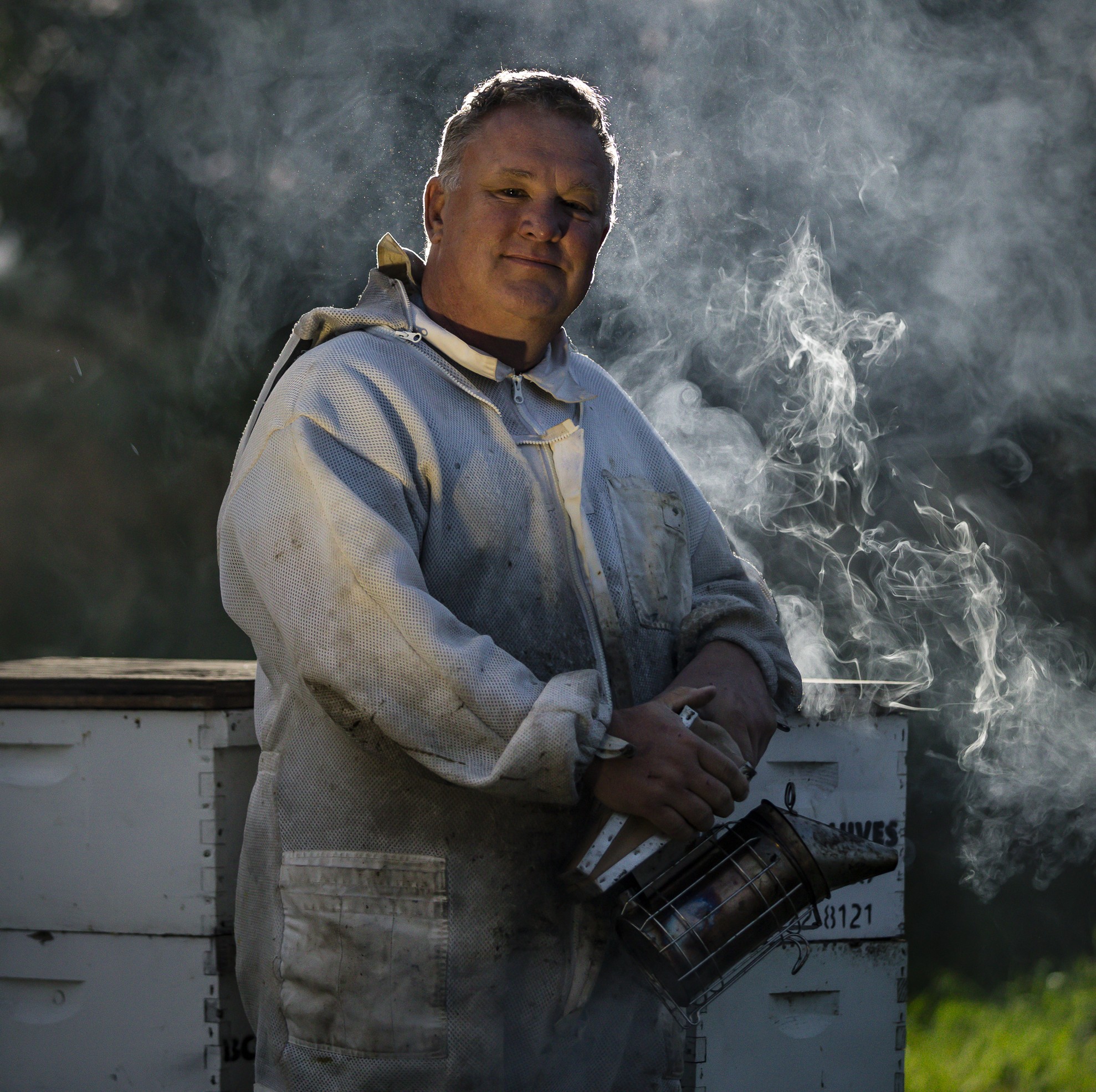 As a beekeeper, BC had previously volunteered for the National Honey Bee Pests and Disease Survey (NHBS), which has been offered at no cost to Colorado beekeepers since 2009. BC understands the value of knowing your pest and disease load in your colonies and has volunteered his bees up for sampling several years. He also volunteered for a longitudinal wax study for pesticides, which looks for traces of a long list of pesticides in the beehive’s wax.
The National Honey Bee survey takes an epidemiological approach to honey bee health and looks for invasive species and diseases that could potentially implode the pollination industry.
In addition to volunteering for the National Honey Bee Survey, BC also donated two large quantities of honey to The American Honey Institute at Kansas State University. They are establishing a robust database of authentic US honey samples that is critical for future regulatory efforts (e.g., the Honey Integrity Act) and for developing rapid, reliable testing protocols. Only a small fraction of imported honey is currently tested for authenticity by the federal government, and the industry is largely self-regulated.
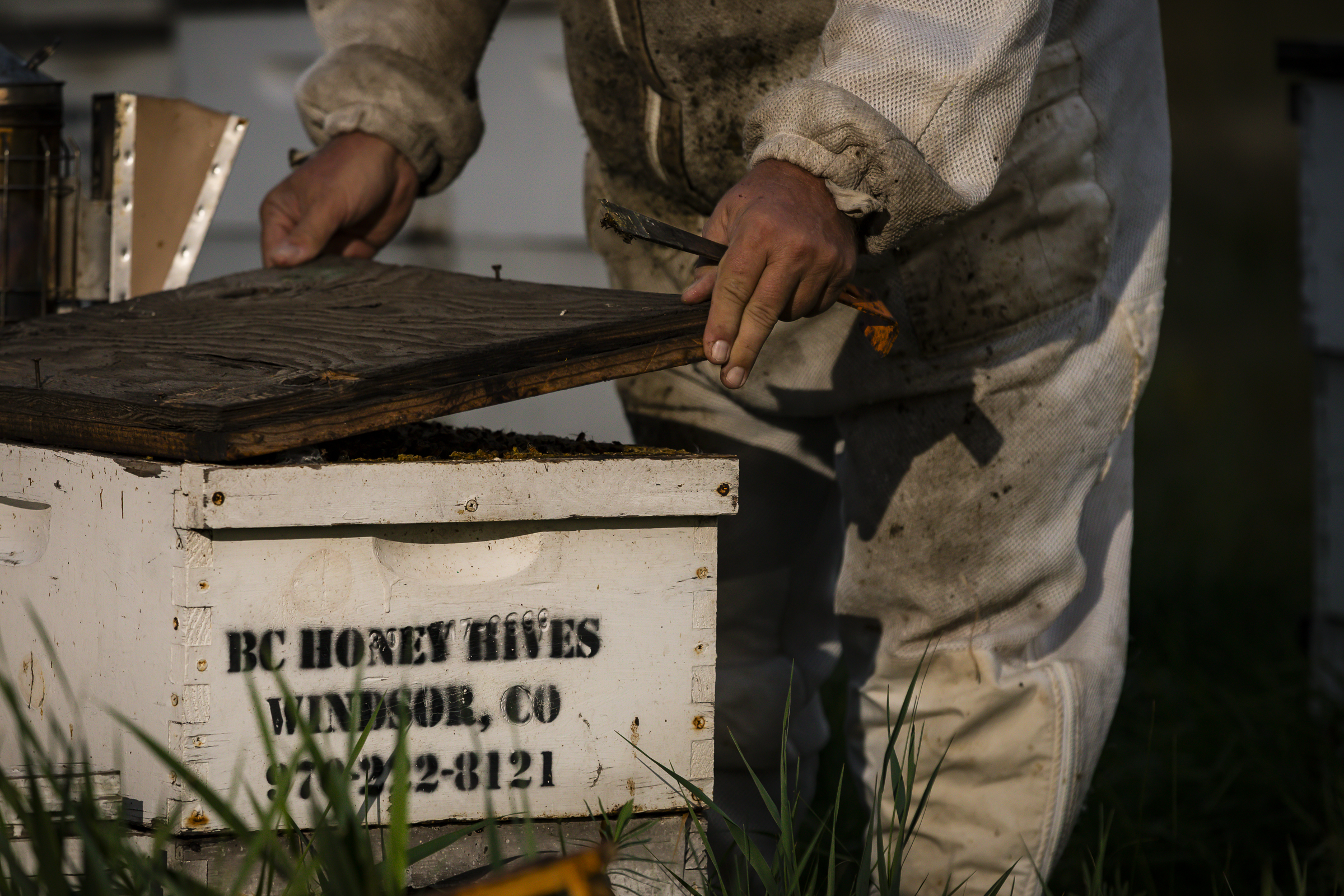
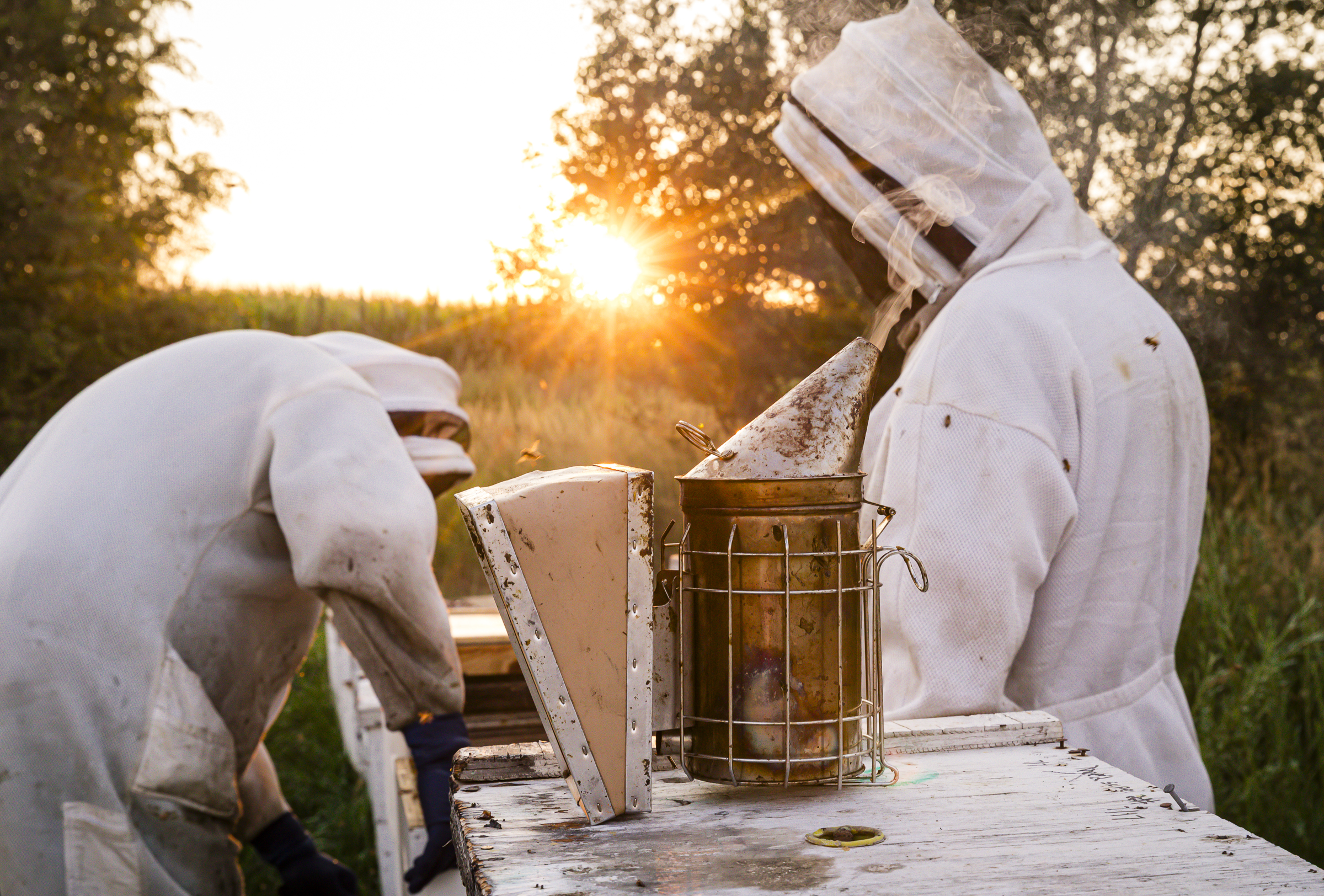
I visited BC in mid-August, before the sun was up for the perfect pictures. As BC popped the first lid to his hive, the bees hummed good morning to him. A few heads with waggling antennae moved up to the top of the frames to see what was going on so early. I could see BC’s energy start charging up. A little smile here, a laugh there. He loves his bees.
BC begins inspecting each hive to make sure his bees are doing well and staying healthy. Moving on to the next hive he breaks apart what is called a "bridge comb” in between the lid and the tops of the frames. The bees started moving to the freshly opened honey comb to clean up the mess. He commented about how light the color of the honey is. Usually the honey starts to turn more amber color as the season continues on. He pulled out a frame of solid capped honey and his smile grew from ear to ear.
“Now that’s what I like to see! HONEY!”
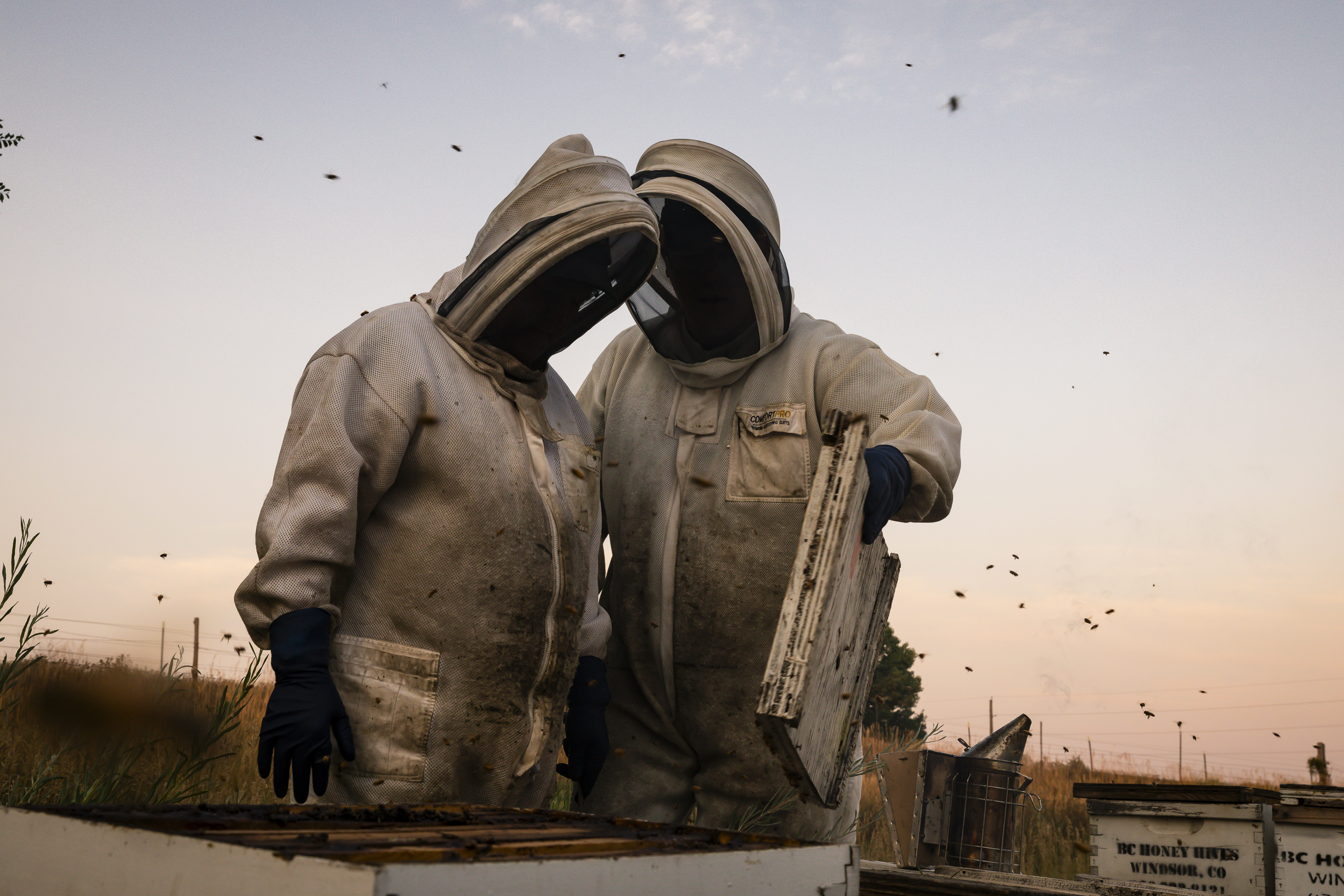 BC’s oldest child Rob arrived to help pull honey frames just as the sun was rising. Rob started working with his father full time this year in the apiary to take a break from the high stress job of being a professional chef. BC and Rob moved from hive to hive like a well oiled machine. They have a noticeable bond between them, few words needed to get the job done.
In 2011, BC started keeping bees when he experienced a challenging transitional period after his son left for college. BC needed something new to focus on, and as fate would have it, he saw a post on Facebook from a beekeeper named David Izaguirre. At that time David was the president of the Northern Colorado Beekeepers Association. He was inviting interested people out to see his beehives and learn about beekeeping.
BC spent one day each week for three weeks learning from David. He was mesmerized by him and how he cared for his bees.
“David is a soft spoken and honorable man, who knows a lot about bees. He would give you the shirt off of his back and he wouldn’t have to know you,” BC tells me.
David has been a friend and mentor to BC ever since.
When I asked BC what a new beekeeper could do to enhance their success through their first year, he said, “Find a mentor.”
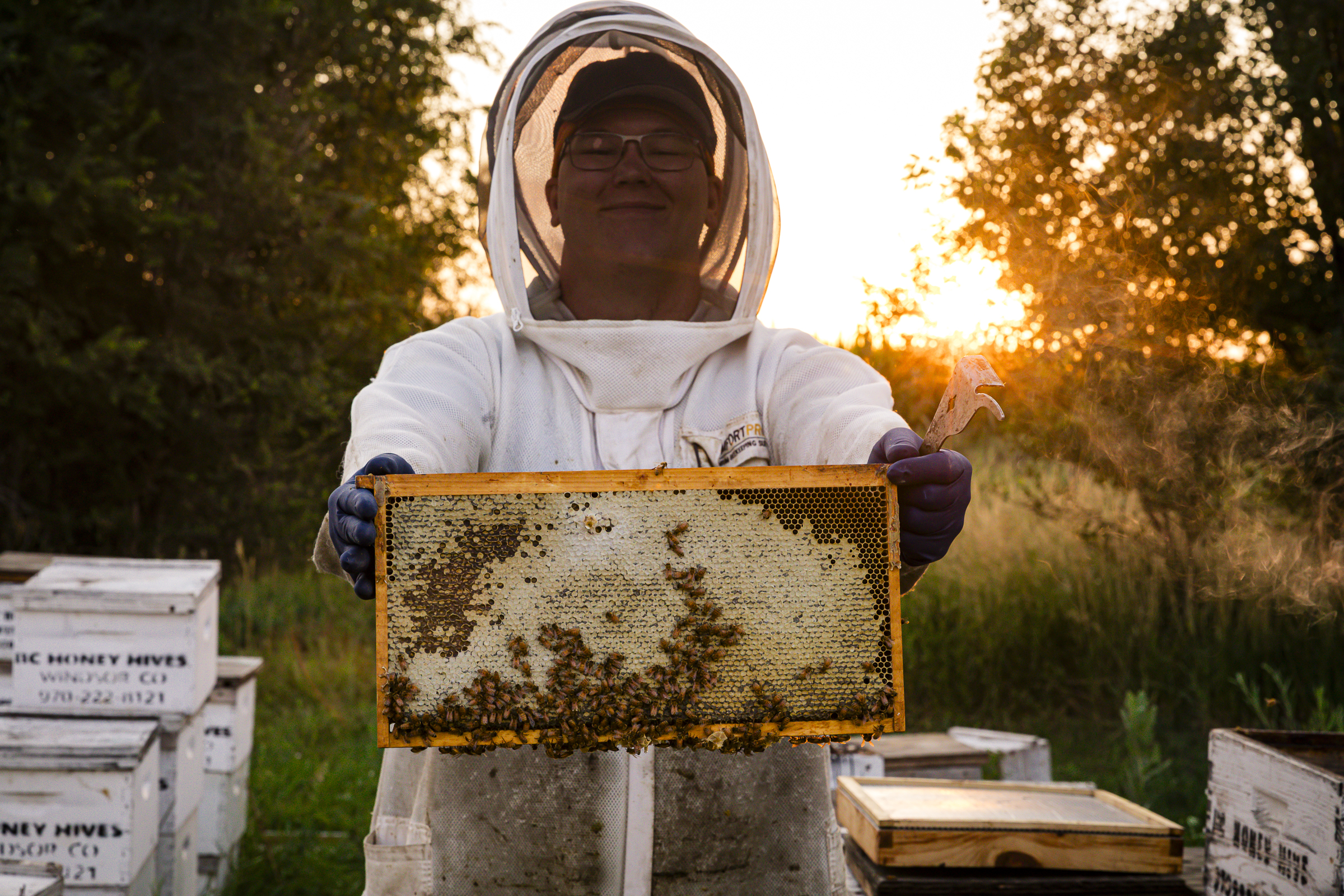 There is a lot to learn in beekeeping and having someone who knows what they are looking at can give you a great head start in beekeeping. Rob echoes his dad’s statement, telling me that he has been a sponge trying to gather all of the droplets of knowledge that his dad and David are constantly sharing with him. He has a passion for the bees like his father does, and I am sure he will be well versed in all things apiculture in no time.
When he started beekeeping in the spring of 2011, BC began with only two 2 hives. This year they have 309 colonies of bees scattered around Northern Colorado in large apiaries. In 2026, BC and Rob are aiming to build up to more than 600+ hives.
BC’s Honey Hives LLC runs “commercial beehives,” meaning there are 4 beehives on one pallet. The hive configuration has a solid bottom board, 2 deeps with 10 frames in each box, and a top migratory cover that is nailed shut for transportation. Each box is spray painted with his business information and loaded on to a semi trailer that can hold 408+ beehives. The semi will take them to California to start the pollination process in the beginning of 2026.
Did you know? Two billion beehives are required annually to pollinate all of the almond orchards in California. Almond Pollination Math
Perseverance is a vital part of being a good beekeeper, and it is common to have a 30-50% hive loss annually.
BC told me there have been times when he thought about giving up beekeeping. He was ready to quit a few years ago after taking bees to California for pollination along with his friend and fellow commercial beekeeper David. Out of the 80 hives he took, 50 died.
“I looked at David and told him ‘I'm done!’” BC says.
 The loss was too much. But his mentor David simply grinned at BC and told him, “ I have lost half of my bees 3 times, and came back from it. What are you complaining about? ” in a joking tone.
To join the National Honey Bee Survey 2026, please email Aja Bos, CDA's Cooperative Agricultural Pest Survey Program Manager.
More about BC
Who: Robert Bishop-Cotner of BC’s Honey LLC
What: Commercial Apiary Beekeepers with a focus on agritourism
Where: Windsor, CO
How long have you been a beekeeper: 11 years
How many hives do you currently have: 309
Favorite Flavor of Honey: Linden Tree
Text and photography by Shelli Quattlebaum.