
Welcome to the second installment of our blog series celebrating Colorado’s 150th anniversary. As we look back on 150 years of statehood, we are highlighting the voices that define our agricultural heritage.
Ronda Lobato is a sixth-generation Colorado native, whose family roots are intertwined with the very founding of San Luis and the surrounding villages. This conversation was captured by Rachael Storm, Head of Curatorial Services at History Colorado, as part of an effort to preserve the living history of the San Luis Valley.
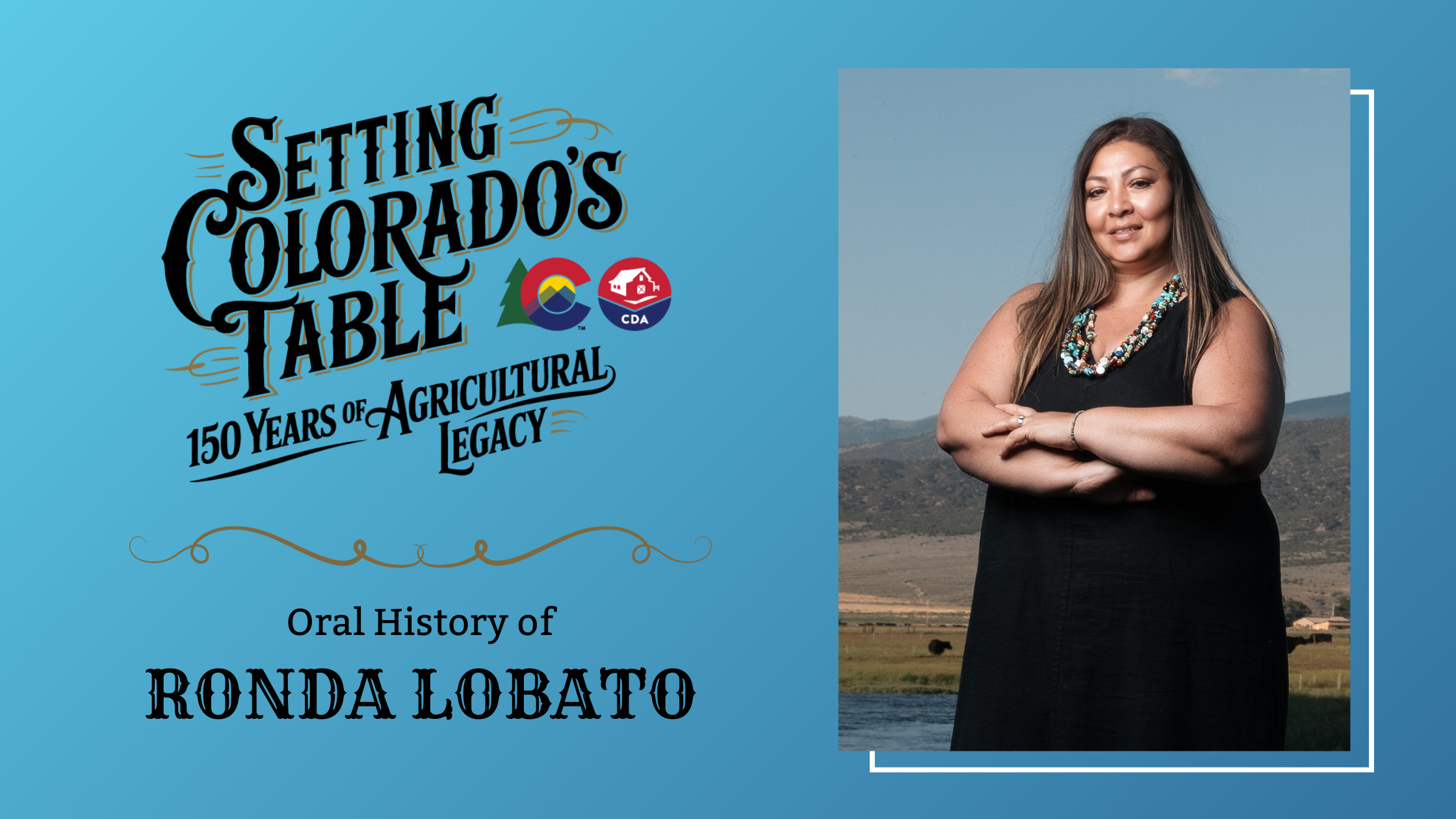 Ronda Lobato is a sixth-generation Colorado native, whose family roots are intertwined with the very founding of San Luis and the surrounding villages. This conversation was captured by Rachael Storm, Head of Curatorial Services at History Colorado, as part of an effort to preserve the living history of the San Luis Valley.
A Legacy Written in the Land
For Ronda Lobato, "home" is a land grant from the Mexican government in Costilla County. Her ancestors—bearing a blend of Native American, Spanish, and Mexican heritage—traveled north from New Mexico to establish some of the earliest settlements in what would eventually become Colorado.
The Lobato family history is a testament to agricultural resilience:
- The Early Years: Historically a ranching family, Ronda’s great-grandparents raised sheep, cattle, and grains like hay and oats on their ranch in La Corriera.
- Childhood Paradise: Ronda recalls her grandfather’s pea fields as a "paradise" where she and her siblings would pick and eat peas until they were sick.
- Continuing the Tradition: Today, Ronda and her husband continue to raise cattle, though they are looking toward the future by testing "craft grains" with the goal of opening a local bakery.
The Wisdom of the Acequia
Central to Ronda’s story is the acequia system—a communal irrigation method brought to the region by Spanish and Mexican settlers. Unlike standard Colorado water law, an acequia is governed by the community of users, known as parciantes.
- Community Governance: Each ditch elects a mayordomo (manager) to ensure water is shared fairly among neighbors.
- Shared Responsibility: Every year, the community gathers for an annual cleaning of the ditches before the irrigation season begins.
- A Way of Life: For Ronda, the acequias were more than just infrastructure; they were the backdrop of her childhood, where she spent summers swimming and swinging from tire swings into the water.
Protecting the Watershed for the Next 150 Years
Ronda doesn't just live on the land; she protects it. As the Costilla County Deputy Assessor and a board member of the Costilla County Conservancy District, she has spearheaded vital conservation efforts.
Following the devastating Spring Fire of 2018, Ronda worked for an entire year to engage local farmers and ranchers in a comprehensive watershed study. This study identified key community concerns, including:
- Wildfire Mitigation: Planning for the safety of the mountains and forests that provide the community's water.
- Water Infrastructure: Improving efficiency and managing sediment issues in the drainage systems.
- Efficient Grazing: Coordinating shared grazing rights on the "Vega"—one of the last known commons for grazing in the country.
Returning to "The Old Way"
As we celebrate Colorado’s sesquicentennial, Ronda is focused on a movement to return to sustainable, community-driven food systems.
Following the loss of the local grocery store, the community has rallied to create a food cooperative and a farm park. These projects aim to teach the younger generation how to grow their own food, can vegetables, and even use a traditional horno (an adobe oven) to bake bread.
"We fed ourselves once before, and we can do it again... our community is realizing that, and so there are efforts in place to try to go back to the old way," Ronda said.
Ronda’s journey from a girl picking peas in her grandfather’s field to a leader in Colorado conservation serves as an inspiration for the next 150 years of Colorado agriculture.