
Dyer's woad
(Isatis tinctoria)
Dyer’s woad ranges from 1 to 4 feet tall with a deep taproot. The plant acts as a winter annual, biennial, or short-lived perennial. The basal rosette produces stalked, bluish-green leaves covered with fine hair. Leaves have a white mid-rib on the upper surface of the leaf. The flowers are numerous, yellow, and very small. Flowers are clustered on the upper portion of multi-branched stems, which typically occurs in April to early June. Fruit or seed pods are winged, slightly pear-shaped, and change from light green to a shiny purplish-black color as they mature. The seeds contained in the fruit are cylinder-shaped and brownish-yellow. The seeds usually form in June and July.
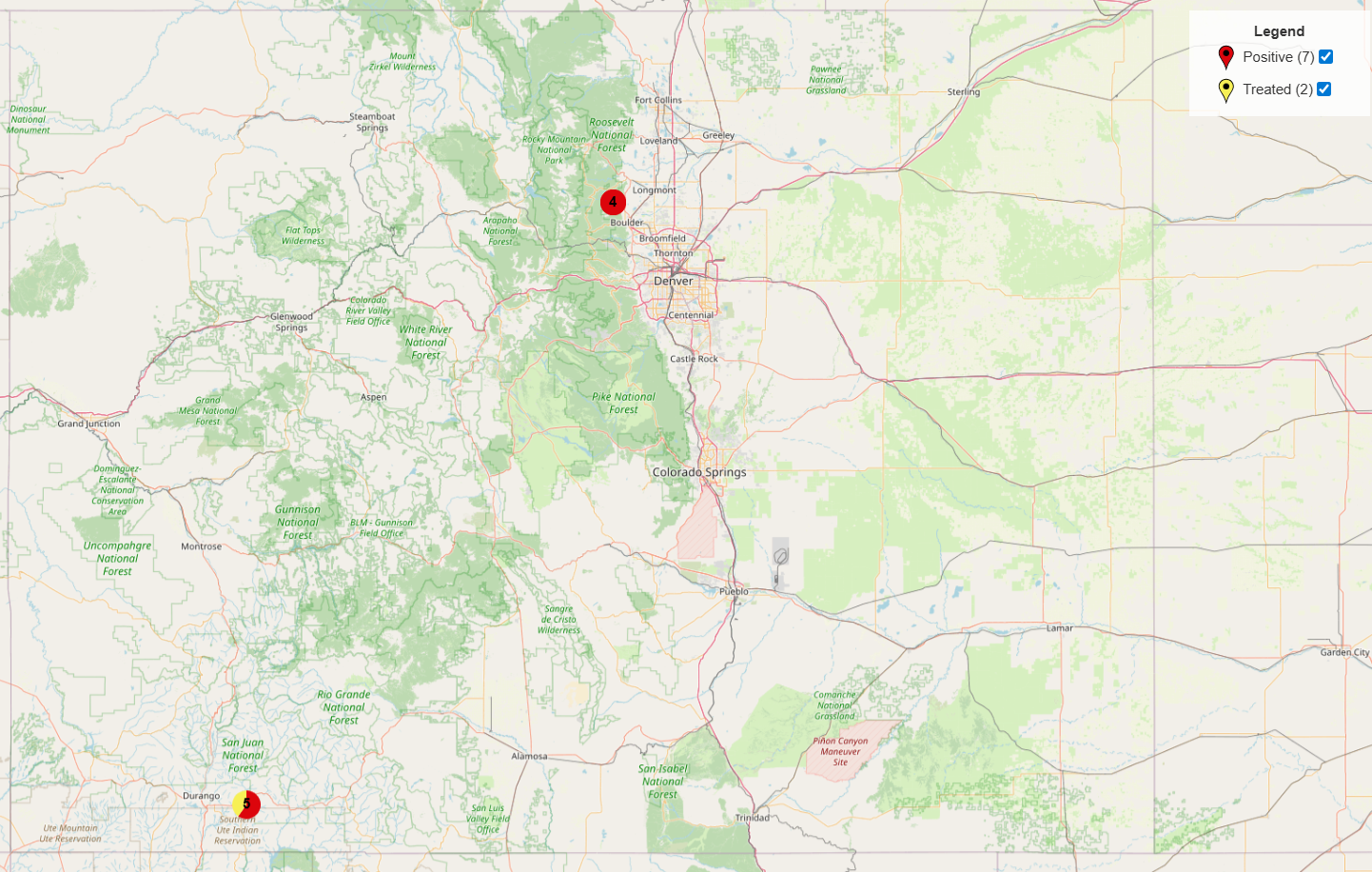
Access the EDDMapS distribution map for Dyer's woad in Colorado by clicking the image below.
Access the USGS INHABIT suitability model for Dyer's woad in Colorado by clicking the image below.
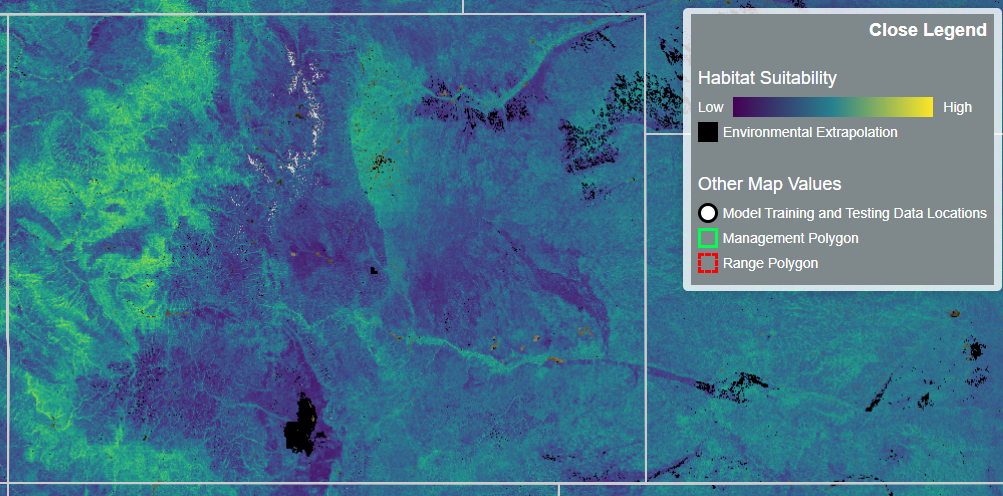
INHABIT is an online tool created by the USGS that provides species distribution models for various invasive plant species. The models associate known occurrences of a species with environmental characteristics to create maps that predict habitat suitability, and these maps can be used to assess the potential spread of noxious weeds. Learn more about INHABIT: https://www.usgs.gov/centers/fort-collins-science-center/science/inhabit-a-web-based-decision-support-tool-invasive